What This Covers
A shed door that will not close, or one soft corner of the floor, is a normal call. Catching it early is what keeps it small, because a building that has started to move keeps moving. Roof screws and loose panels get refastened and resealed, and a full tear off and re roof goes to a licensed roofer.
Structure
- Bottom plate rot where the wall meets the ground
- Releveling a shed that has settled or heaved on its skids
- Floor repair where decking has gone soft under equipment
- Wall framing and bracing on a building that has started to lean
- Rafter and roof framing where the ridge has started to sag
Weathertight
- Shed doors that have dropped and no longer latch
- Sliding door track and rollers replaced
- Siding replacement on the sun beaten south and west walls
- Gaps sealed at the base and eaves where dust gets in
- Metal roof panels refastened and resealed at the screws
- Paint and stain before the siding chalks out
Upgrades
- New sheds and small shops built on site
- Windows and vents added for light and airflow
- Shelving, workbench, and loft storage built inside
How Shed and Shop Work Goes
Most shed calls start at eye level. The door drags, the siding has gone chalky, a panel rattles in the wind. Those are the parts you notice, and they are usually not what decides the job. What the building is sitting on decides that, so it is the first thing we look at.
Outbuildings here get moved by the ground under them. Skids and blocks sit on soil that takes irrigation water all summer and then lifts again through the freeze and thaw, and a building that has racked even slightly reports it through the doors first. A door that will not latch is usually telling you about the base, not the hinges. The other half of it is the bottom of the walls. Blowing dust piles against the siding, holds moisture after a storm, and rots the bottom plate from the outside in, behind trim where nothing shows until the wall gets soft.
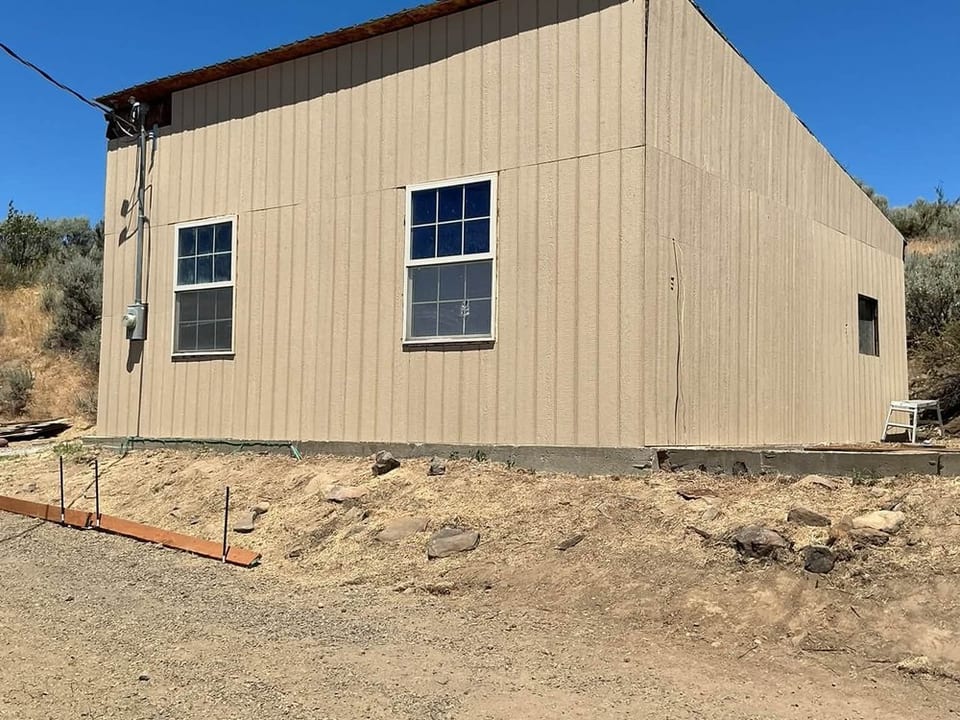
If the frame and the base are sound, the work is siding, resealed roof screws, and a rehung door, not a new building. If the bottom plate has gone, we pull a piece of trim, show you what is behind it, and say so plainly, because new siding over soft framing hides the problem for a season. Power out to a building goes to a licensed electrician, water to a pump house goes to a licensed plumber, and a design that needs a stamp goes to an engineer. Either way you hear what we found and why it matters. Two of ours are documented: a rural garage re-clad in steel siding and a steel-shelled pen built to outlast lumber prices.
Questions
Outbuilding Questions
The questions that come up before a shed or shop job starts, answered the same way we would answer them standing in your driveway.
Is this shed worth repairing, or should I just replace it?
The base and the framing decide that, not how rough it looks. Faded siding, a sagging door, and a chalky roof read as a building at the end of its life, and they are the simplest parts of it to put right.
What we check first is the bottom plate, the floor framing, and whether the building still sits level. If those are solid, a shed that looks finished usually has plenty left in it, and the work is siding, doors, and sealing. If the bottom plate has rotted along a full wall and the floor is soft underfoot, you are rebuilding the building one piece at a time, and it is fair to say that out loud. You will know which one you are looking at before any work starts.
Why do my shed doors stop closing?
Usually the door did not change, the building moved. Sheds sit on skids, blocks, or a slab that rides the ground, and the ground here moves with irrigation in the summer and freeze and thaw in the winter. One corner drops, the opening goes out of square, and the door binds at the top corner or swings open on its own.
Planing the door to fit is the repair that comes back. It works until the next season, then the gap opens somewhere else. The longer lasting fix is to level and re block the building, square the opening, and rehang the door on hardware that suits its weight. Sometimes it really is worn hinges or a bent track, and we will tell you when that is all it is.
Can you build a new shed, and does it need a permit?
Yes, small outbuildings get built on site, from the floor framing through the roof and siding. A shed for tools and a shop you can actually work in are different buildings, so the questions up front are what goes inside it, how much of the year you need it usable, and what you want to be able to drive through the door.
Permits depend on size and setback, and your city or county decides that, not us. The rules are not written the same way in every jurisdiction out here, and there are size thresholds where what is allowed changes. We will tell you what we understand about your situation and where you need to confirm it with the permit office. Power run out to the building goes to a licensed electrician, and a pole building that needs an engineered design goes to an engineer for the stamp.
Can you keep dust and mice out of my shop?
Most of it comes in at the bottom, not through the walls. The gap where siding meets the base, the space under a door that no longer sits flat, and the open ends of metal roof panels are the usual routes. Blowing dust finds the same openings mice do, which is why a shop in farm country gets both at once.
Sealing works from the ground up. Closing the base, fitting a threshold and sweep under the door, and putting closure strips at the ends of roof panels handles most of what gets through. Siding that has pulled loose from the trim gets refastened and sealed. It will not make a shed airtight, and a building that has settled hard needs to come back level before sealing means much, but it changes how much comes through on a windy week.
Ready to get it done?
Tell us about the project, or call and talk it through.