What This Covers
One hole in one wall is a normal call. Most of this work is small, and what makes it look right is matching the texture and paint that are already there.
Patching
- Drywall patching, from nail pops to full sheets
- Doorknob holes and dented corner bead, patched flush
- Cracked seams and lifting tape at ceiling joints
- Water damaged board cut back to dry material
- Access patches after a plumber or electrician opens a wall
Surfaces
- Texture matching, knockdown, orange peel, and hand troweled
- Skim coating a wall back to flat
- Interior painting, primer through the final coat
- Stain blocking primer over smoke and water marks
- Popcorn ceilings, not disturbed until an asbestos test clears them
Finish Work
- Baseboard and door casing run and mitered
- Interior doors hung and adjusted so they latch
- Closet shelving and rods anchored into framing
- Caulking the gaps trim leaves behind
How Drywall Repair Usually Goes
Most calls start with something small. A doorknob went through the drywall, a crack has opened above a door, a row of nail heads is showing through the paint. People think the patch is the job. The patch is the fast part. Cutting in a new piece of board and taping it flat is straightforward. What decides whether you can still see it from the doorway is the texture and the paint that go over it.
Houses here move with the weather. Summers run long and dry, winters freeze hard, and the swing between a hot afternoon and a cold night pulls moisture in and out of the framing all year. That movement shows up inside as hairline cracks at the corners of doors and windows, and as nail pops running down a stud line. A crack that keeps coming back in the same place is movement, not bad tape. Patching it again without looking at what is behind it only resets the clock.
Matching is the part worth being honest about. On a wall that has been painted for years, sun through the window and a few smoke seasons have already shifted the color, so a fresh coat of the same paint can still leave a visible square. Sometimes the fix is to coat the whole wall, corner to corner, and sometimes the patch sits where nobody looks. You hear which one it is before the work starts, not after. Taking a built-in closet out and closing the wall behind it is the same work at a slightly larger scale.
Questions
Drywall Questions
What people want to know before we open a wall in their house, answered straight.
Will the patch match the rest of the wall?
Texture is usually the easy half. Sprayed finishes like knockdown and orange peel can be worked back close enough that the repair reads as wall once the paint is on. Hand troweled texture and older ceiling patterns take longer to copy. Either way it gets tested on a scrap board first, not on your wall.
Paint is where you want the honest answer. Existing paint fades and collects dust, and dusty wind and late summer smoke give it plenty of both, so even a can of the original color can leave a visible square. On a small patch in a hallway corner, that does not matter. On a wall you look at every day it does, and the answer is to carry the paint corner to corner instead of stopping at the patch. You hear which one your wall calls for before we start.
Is it worth patching, or should the whole wall come out?
Patching is almost always the right call. Drywall is a surface, not structure. A hole, a crack, or a soft section can be cut out and a new piece set in without touching the rest of the sheet, and the seam gets taped and textured like any other joint.
Replacement earns its keep when the board itself has failed. Sheets that have been wet and gone soft, a ceiling sagging between the joists, or a wall carrying damage in too many places to chase take more work to patch than to replace. If the sag traces back to the framing, that is a call for a structural engineer, not a taping knife. And when a wall has been wet, the drywall is the smaller question. Where the water came from is the bigger one, and a plumber or a roofer answers that before anything gets closed up.
There is a brown stain on my ceiling. Can it just be painted over?
Not until whatever caused it has stopped. A stain still being fed by water will bleed back through fresh paint, and the board behind it may already be soft. The first thing to sort out is the source: a roof, a supply or drain line, or a bath fan venting into the attic instead of outside.
Roofing and plumbing are separate licensed trades, and that work goes to them. We will say so rather than chase a leak we are not licensed to fix. Once the source is handled and the area has dried out, the repair itself is ordinary work: cut out the damaged board, set in new, prime the area with a stain blocker before any finish coats, and blend the ceiling texture back in.
How much dust does this make, and how long is the room out of use?
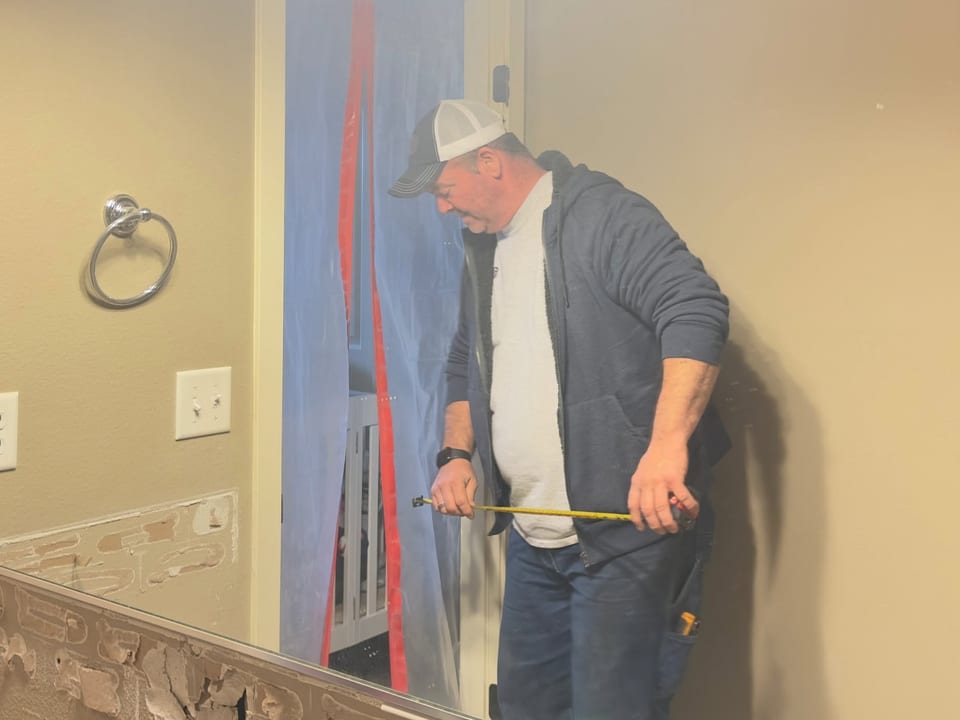
Sanding joint compound makes a fine dust that travels. We hang plastic at the doorway, cover floors and anything that stays in the room, and sand with dust control where the repair allows it. It still is not a zero dust job inside a finished house, and that is better to hear now than to discover on your countertops.
Drying time sets the schedule, not the patching. Joint compound has to dry between coats, and most repairs take two or three coats plus sanding before any paint goes on. That usually means a few short visits rather than one long one. An empty rental moves faster because coats can run back to back. You get the realistic version of the schedule before work starts, and if something moves, you hear it from us.
Ready to get it done?
Tell us about the project, or call and talk it through.