What This Covers
One cracked panel or a single soft trim board is a normal call. Small openings are how water gets behind a wall, so they are worth closing while they are still small.
Siding
- Cracked and broken panels cut out and replaced
- Panels the wind has pulled loose refastened
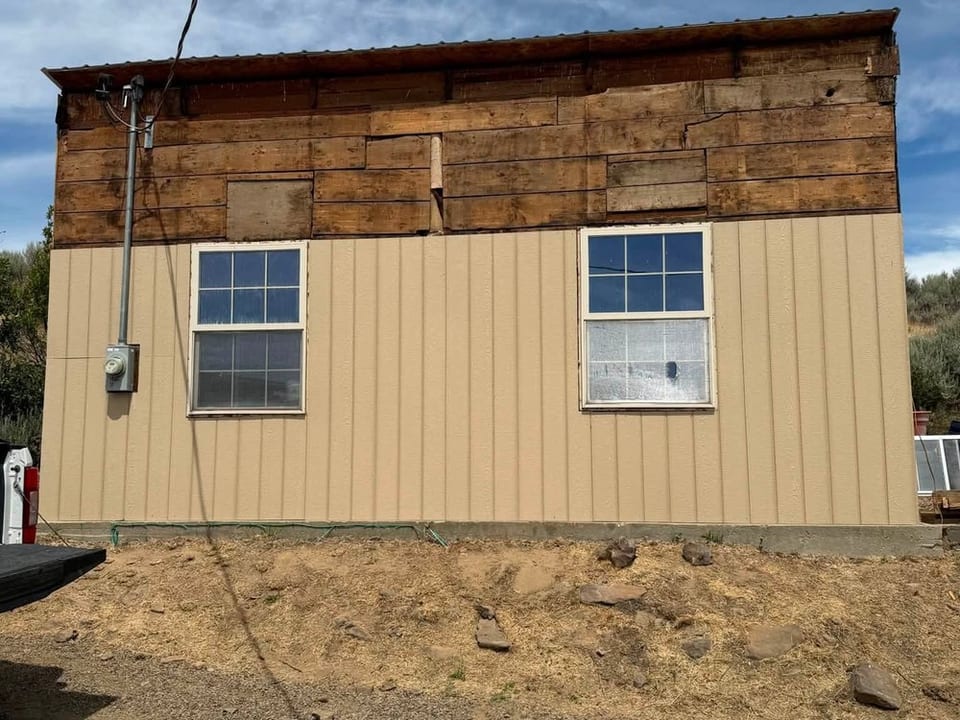
- T1-11 and wood siding rotted along the bottom edge
- Woodpecker holes patched and sealed before winter
- Skirting on manufactured homes replaced where it has cracked
Trim
- Fascia and soffit replaced where boards have gone soft
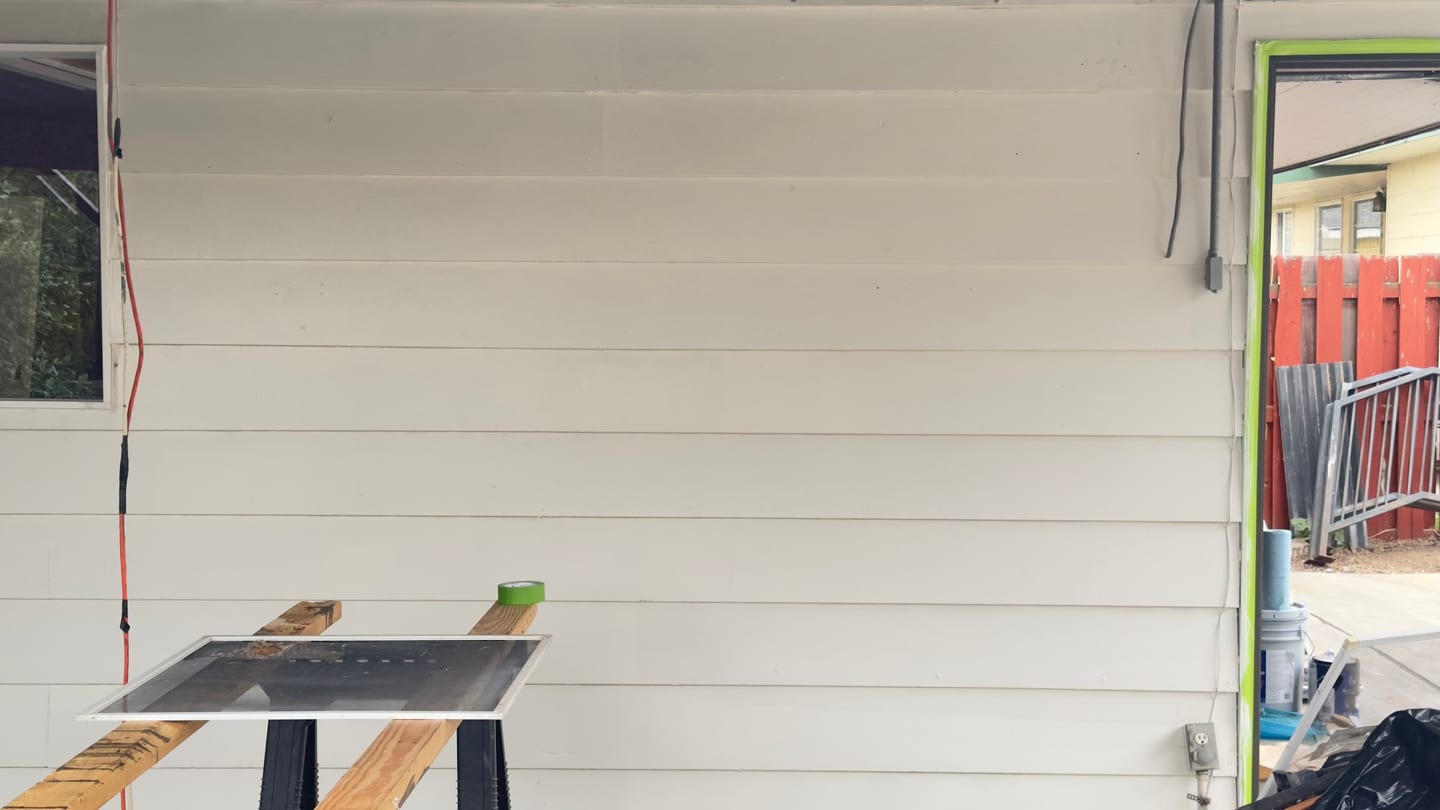
- Corner boards and window casing cut and replaced
- Failed caulk joints cut out and resealed
- Gutters and downspouts rehung and redirected from the foundation
- Weatherstripping and door thresholds replaced
- Torn window screens rebuilt after blowing dust
Structures
- Fence posts and pickets reset after a windstorm
- Sagging gates re-squared and rehung
- Sheds and carports patched and re-sided
How Siding and Trim Work Usually Goes
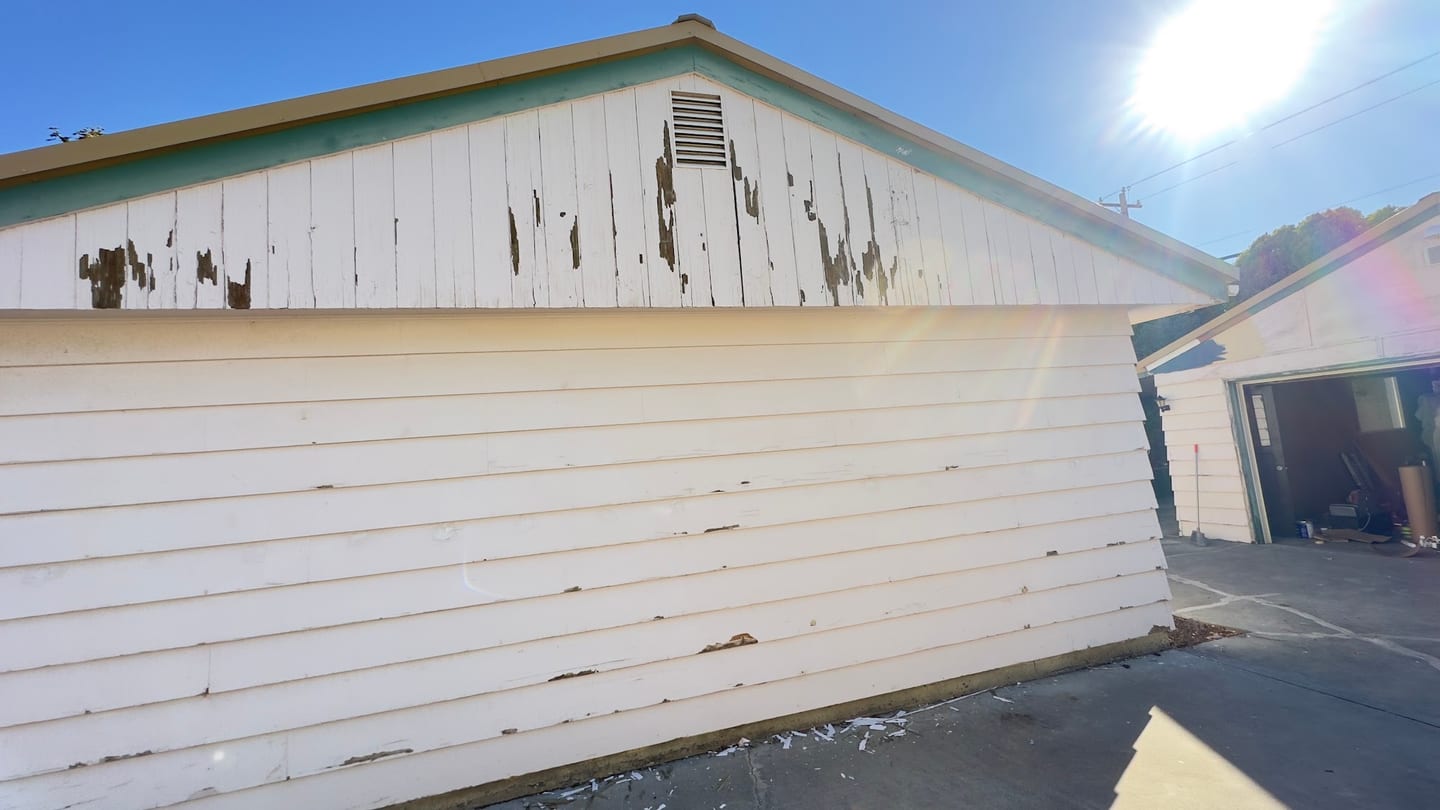
Most exterior calls start with something you can see from the driveway. A cracked panel, a trim board that gives when you press it, paint peeling on one wall and not the others. Those are the symptoms, and they are rarely the whole story. How long water has been getting in behind that spot is the real question, so that is what we look for first.
A wall in Central Washington gets worked from both directions. Long dry summers bake the south and west faces until wood shrinks, joints open, and paint chalks. Then wind drives dust and rain into every opening that has just been made, and the freeze and thaw cycle widens it. Down low, irrigation overspray and hard water keep the bottom courses damp and leave mineral crust behind. The openings are what matter, at trim joints, around windows and doors, at every vent and hose bib, and along the bottom edge near grade.
If the sheathing behind the siding is dry, replacing the failed pieces and resealing the joints puts the wall back in shape without re-siding the house. If it is wet, we open enough to find where it stops and tell you what is there rather than covering it back up. Where the source turns out to be the roof, or where wiring or plumbing sits in a wall we have opened, that part goes to the licensed roofer, electrician, or plumber. You see what we found and hear the reasoning behind the estimate.
Questions
Exterior Questions
The questions people ask before an exterior job starts, answered the way we would answer them standing at the wall.
Can you replace just a few pieces of siding, or does the whole wall have to come off?
A patch is a normal call and usually the right one. What fails on a wall is usually in one place: the bottom course near grade, the side the sprinkler hits, the panel a ladder or a stray rock cracked. Those pieces come out and new ones go in without disturbing the rest of the wall.
The honest catch is matching. Years of sun change the color of what is already up there, and older profiles, vinyl especially, get discontinued. Sometimes the closest match comes off the back of the house, moving original pieces to the wall you see and new ones where you do not. We tell you how close the match will be before the work starts.
Is this siding worth repairing, or is it time to replace the whole thing?
Spot failure and whole wall failure are two different jobs. If a few areas are bad and the rest still holds paint and sheds water, repair is the smaller job and usually the one that makes sense. What tells you which one you have is how many places are failing at once, and whether they share a cause.
When the wall is going everywhere at the same time, patching stops making sense. Hardboard swelling along every bottom edge, vinyl gone brittle enough to crack when it is unhooked, wood that will not hold a fastener anymore. That is a re-side, a different scope and a different conversation, and we will tell you that instead of selling you a season of patches. The estimate is free either way.
How do I know if water has already gotten behind the siding?
The signs show up at the edges first. Trim that feels soft at a corner or under a window, paint bubbling in a line instead of a patch, a stain running down from one corner of a window, nail heads that have rusted and bled. Inside, look for a darkened baseboard or a musty smell on an exterior wall.
You cannot always tell from the outside, and guessing costs more than looking. Where the signs point to it, we open a small area and look at the sheathing, which answers the question and closes back up easily. If the water is coming off the roof or through it, that is roofing work and goes to a licensed roofer rather than getting chased from the wall.
What time of year should exterior work get done around here?
Repairs run year round, and coatings are the part with a season. Caulk and paint need the surface in a temperature range and they need time to cure. In midsummer a south wall can be too hot to coat by late morning, so that work goes early in the day or into spring and fall. In a hard freeze sealant will not set and paint will not bond.
Some openings should not wait for a good week. A gap at grade or around a window heading into fall means water gets behind the wall and freezes there. Those get closed when we find them, even if the finish coat comes later. Blowing dust and smoke season ash land in wet sealant, so coating days get picked around the wind.
Ready to get it done?
Tell us about the project, or call and talk it through.