What This Covers
One shelf is a normal call. So is a garage of boxes after a move, and the mirror that has been leaning against the wall since you got the keys.
Mounting
- TV mounting on drywall, tile, brick, or over a fireplace
- Floating shelves set level and tied into framing
- Heavy mirrors and framed art hung once and left level
- Curtain rods, blinds, and shades across wide windows
- Wall cabinets and pegboard in garages and shops
Assembly
- Flat pack furniture, box to finished piece
- Beds, desks, and dressers built and pulled square
- Workbenches and garage shelving built and secured
- Exercise equipment leveled on a sloped garage floor
- Grills, patio sets, and shed kits put together outdoors
Anchoring
- Anti tip anchoring for dressers and tall bookcases
- Grab bars into studs, or blocking added first
- Overhead garage racks fixed into ceiling framing
- Wall anchors matched to drywall, plaster, or block
How Mounting and Assembly Jobs Go
Most of these calls start with the bracket. People ask whether the mount is rated high enough, or whether the TV is too heavy for the wall. The hardware is almost never what decides the job. What sits behind the drywall decides it, so that is where we start: where the studs actually fall, whether there is blocking, and what the wall is made of once you get past the paint.
Houses around here do not agree on that. Older farmhouses have lath and plaster, shops and basements have block and brick, manufactured homes have walls that will not hold a lag bolt, and newer construction has blocking only where the builder guessed a TV would go. The anchor gets matched to the wall you have, which is why we bring more than one kind. Outdoor assembly has its own problem, and it is wind. Patio sets, umbrellas, playsets and shed kits sit in open ground through long dry summers and blowing dust, so they get staked or bolted down rather than left to their own weight.
Moving power to a new spot behind a TV is electrical work and goes to a licensed electrician. Running the HDMI through the wall and tidying the cords already there is ours. When a box turns up short a bracket, you hear it before we start rather than after, because a half built bed and a bag of unexplained parts is worse than an empty room. You hear what the wall will hold before anything gets drilled into it.
Questions
Mounting Questions
What people ask before anything goes on the wall, answered the way we would answer it on the phone.
Will the mount hold, and what if there is no stud where I want it?
The stud location decides the method, not the weight of the TV. Most mounts are rated past what gets hung on them. The ones that work loose are usually the ones anchored into drywall alone, or held by a lag that caught the edge of a stud and had nothing left to bite.
When there is no stud where you want it, there are still real options. A wider plate can reach two studs, a full motion arm can be offset and swung back to center, and in the right wall a rated toggle carries a light shelf. What does not happen is weight going onto an anchor that is not rated for it. If the spot you picked cannot be done safely, you hear that before anything gets drilled, along with the nearest spot that works.
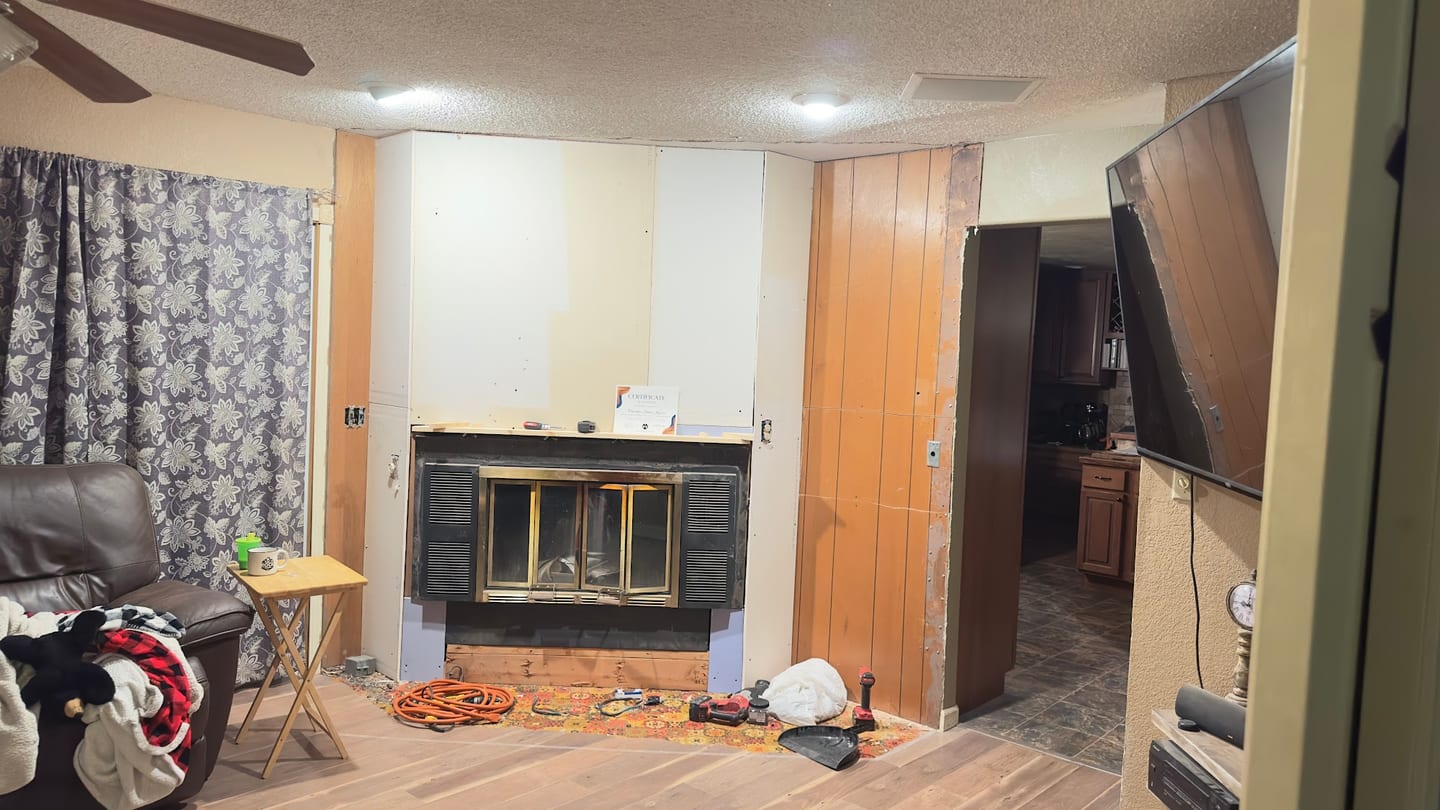
Can a TV go over the fireplace, or on brick or stone?
Usually yes, and what is behind the fireplace decides how. Some are framed chases with drywall and no blocking anywhere near the spot everyone wants. Some are solid brick or block. Some are stone veneer over framing, which looks solid and is not. We find out which one you have before drilling, because the anchor is different for each and a wrong hole in stone does not patch away.
The part people regret later is height. Above a mantel puts most screens higher than is comfortable for a long evening, so a full motion arm that pulls down and out is worth thinking about before the hole goes in. Heat coming off the firebox is worth checking too. And if you want the power cord gone as well as the HDMI, adding an outlet up there is electrical work for a licensed electrician.
Is it worth paying someone to assemble furniture that comes with instructions?
Honest answer: for one bookcase with clear instructions, probably not. If you have the afternoon and the floor space, most flat pack goes together fine. What is worth handing off is anything with a real failure mode. A bed that squeaks forever because it was never pulled square. A tall wardrobe that has to be anchored to the wall. Anything heavy enough that it has to be built in the room it will live in.
The other reason people call is the pile. After a move there is usually a garage of boxes and a list that has been waiting since you got the keys, and working through it in one visit beats spreading it across weekends. We also turn up with the anchors, shims, and bits the box does not include, which is what stalls a lot of Saturday assemblies.
Can you do a whole list in one visit, and can the cords be hidden?
Yes, and a list is easier to schedule than a single item. Shelves in a couple of rooms, rods across the house, a TV, and a stack of boxes in the garage is a normal call. Tell us everything on the list when you book, not just the job you think is the biggest, because the order the work goes in changes how long the whole thing takes and what gets loaded in the truck.
On cords, people mean two different things. The HDMI can be run inside the wall and brought out below the screen, and that part is straightforward. Hiding the power cord means adding an outlet behind the TV, which is electrical work and belongs with a licensed electrician. If you want both, line it up before we start so the wall only gets opened once.

Ready to get it done?
Tell us about the project, or call and talk it through.