What This Covers
One door that will not latch is a normal call. So is a list of small things you have walked past for years, which is usually what turns up once you start checking every door and window in the house.
Doors
- Sticking and dragging doors diagnosed at the hinges and jamb
- Door replacement, interior slabs or full exterior units
- Sliding patio doors, rollers and track cleaned or replaced
- Bifold, closet, and pocket doors back on their track
- Storm and screen doors hung, adjusted, or replaced
- Deadbolts and knobs installed and strike plates reinforced
Windows
- Screens rescreened, reframed, or built to fit
- Sash balances and cranks on windows that fight you
- Sill and exterior trim rot cut out and replaced
- Interior casing and trim replaced or refit after a swap
- Blinds and curtain rods mounted level and into solid framing
Weatherproofing
- Weatherstripping, sweeps, and thresholds swapped when they stop sealing
- Caulking and sealing around window and door openings
- Dust and draft gaps closed up ahead of wind and smoke season
How Door and Window Calls Go
Almost every door call starts the same way. It drags on the jamb, it catches at the top corner, it will not latch without a shove. People assume the door swelled and needs planing. Usually the door is fine and the opening moved. Hinge screws work loose in soft framing, jambs shift, and houses settle a little every year until the gap goes uneven top to bottom. So we check the opening for square and pull the hinge screws first, because a door planed to fit a crooked frame fits until the season turns.
Central Washington is hard on this part of a house. Long dry summers and big day to night swings keep wood moving, and freeze and thaw works on anything already loose. Wind drives dust through gaps nobody thinks about, and smoke season shows you exactly where a house leaks. Old weatherstripping goes hard and stops touching the door, which is why a door can close and latch properly and still let in a draft you feel from across the room.
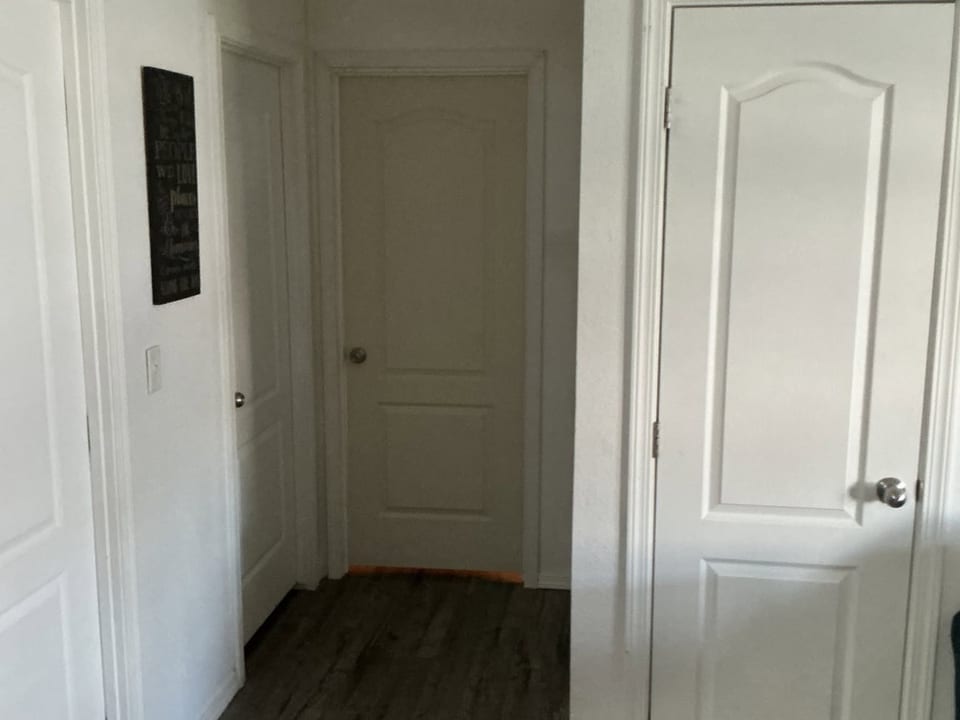
People judge repair or replace by the door. The jamb and the sill decide it. A sound frame means adjustment, hardware, and fresh weatherstrip are usually the whole fix. Rotten jamb legs, a soft sill, or an opening that has moved with the foundation is a different job, and real settlement belongs with a structural engineer. Fogged double pane glass goes to a glass shop for a new sealed unit. Either way you hear what we found before anything gets ordered. We cut a new doorway into a hallway and matched the door to the ones already hanging in it.
Questions
Doors and Windows
The things people ask before a door or window job, answered the way we would answer them standing in the doorway.
My door sticks and drags. Does it need to be replaced?
Almost never, and the door itself is the last thing we look at. A door that drags, catches at the top corner, or needs a shove to latch is telling you the opening changed shape. Hinge screws back out of soft framing, the jamb moves, and the gap goes uneven from top to bottom.
Most of those come back with hinge and strike adjustments, sometimes long screws driven into the stud behind the jamb to pull the whole thing back into line. That is a short call, not a replacement. We recommend a new door when the slab is delaminating or split, when the jamb legs are rotten at the bottom, or when the unit sits far enough out of square that adjustment cannot bring it back. You will hear which one it is and what we saw that decided it.
The glass in my window looks foggy between the panes. Can that be fixed?
The seal between the panes has failed, and cleaning will never touch it. Once moisture works its way between two panes, the fog sits on the inside surfaces where nobody can reach. Hot days, cold nights, and years of that cycle are what wear those seals out, so when one window in a house fogs it is worth walking the rest.
The fix is a new sealed glass unit, and that is glass shop work rather than handyman work. The frame and the sash usually stay where they are. We can tell you what you are looking at, take accurate sizes, and handle the trim, casing, and sealing around the opening once the new unit is in. What we will not do is sell you a repair for something that does not have one.
The house is drafty in winter. Is it the windows?
Start at the doors, because that is where most of the air is actually moving. The bottom of an exterior door, a threshold that has been walked on for decades, and weatherstripping that has gone hard and stopped touching the slab are where it is usually coming from. Those are small fixes that change how a room feels.
Windows come second, and sealing them usually beats replacing them. Caulk fails at the outside casing, sash locks stop pulling the two sashes tight against each other, and the gaps you can see daylight through in February are the same ones dust and smoke find in August. If a window is genuinely finished, replacing it is a bigger job that gets into siding, flashing, and trim, and we will say that before we start rather than after.
How long does a door or window job take?
Adjustments and hardware are usually one visit. Sticking doors, strike plates, sweeps, weatherstripping, screens, blinds, and a lock swap are the kind of work that gets finished while we are there. Nothing has to be ordered, so nothing waits on a truck.
Replacements run on supply, not on us. Stock interior doors and common window sizes move quickly. An exterior door, an odd size, or anything that has to match existing trim gets ordered, and lead time is the part nobody controls. You get a realistic window before the work starts instead of an optimistic one, and if a date moves you hear it from us first. Exterior openings also watch the weather, since nobody should pull a door out of a wall on a day the wind is running hard.
Ready to get it done?
Tell us about the project, or call and talk it through.